27 Free Compliance Guides — Every province, every regulation, cited to official sources
Regulation Compliant

School Zone Signs Ontario — Municipal Requirements & Standards 2026

Shopify API·6 min read

What the Law Requires

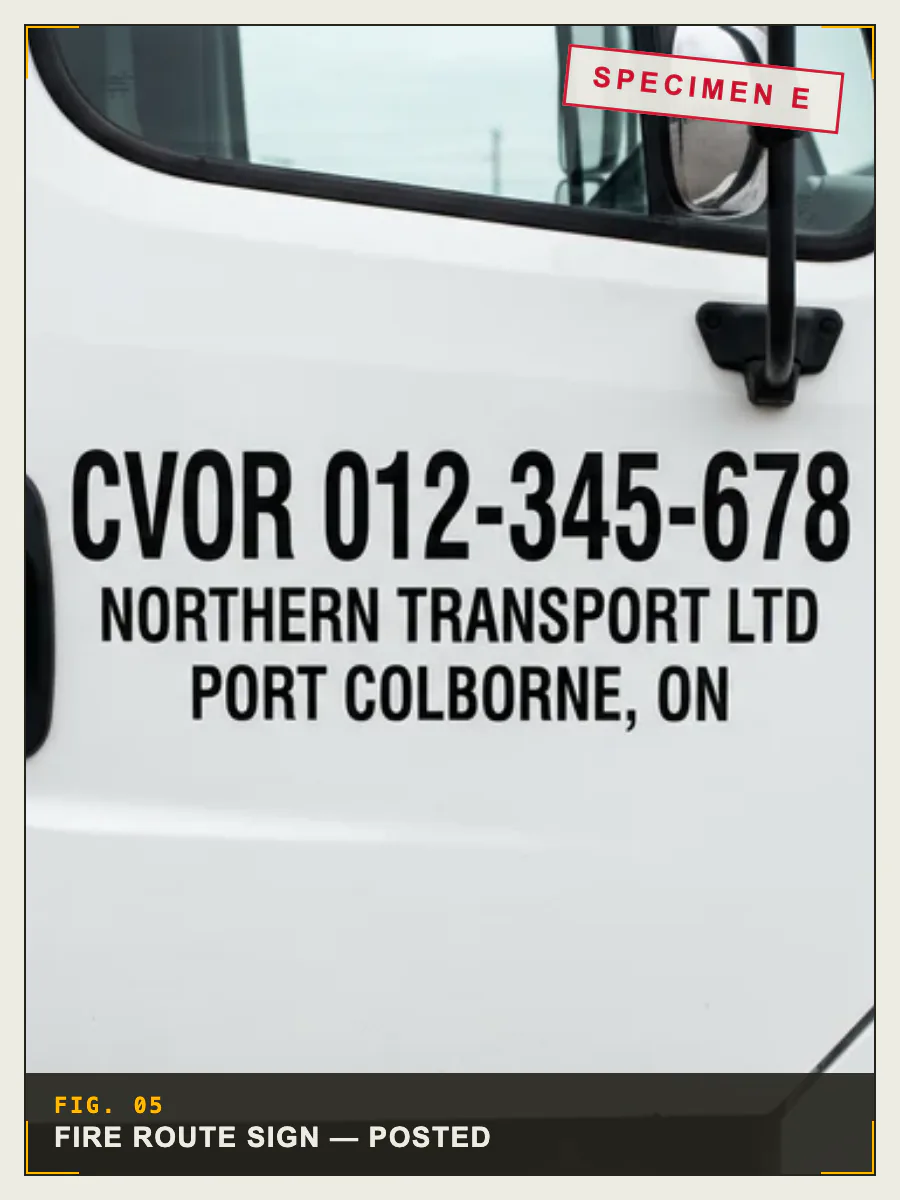
In the province of Ontario, the installation and maintenance of school zone signs are not merely matters of courtesy; they are strict legal obligations mandated to ensure the safety of students and the public. The primary legislation governing these requirements is the Highway Traffic Act (HTA), specifically the sections related to school crossings and school zones. Under the HTA, municipalities have the authority to establish school zones where speed limits are reduced, and signage is mandatory to enforce these reductions. Our Ontario CVOR door decals makes this easy for any business.

Furthermore, the Occupational Health and Safety Act (OHSA) may apply to businesses constructing or maintaining these signs, ensuring that workers install them according to safety standards. For schools and private educational institutions, the Fire Code of Ontario also plays a role, particularly regarding the placement of exit signs and directional signage near school premises, which must not obstruct emergency access or confuse drivers. While the Ontario Building Code (OBC) primarily addresses structural integrity, it intersects with signage when signs are permanently affixed to building structures or poles that impact accessibility routes.

Businesses operating near schools or managing school transportation services must also adhere to the Accessibility for Ontarians with Disabilities Act (AODA). This act mandates that signage must be accessible to individuals with disabilities, which may require specific font sizes, contrast ratios, and braille or tactile features on related informational signs, although the primary traffic regulatory signs follow Ministry of Transportation (MTO) standards.

Sign Specifications

To be legally valid and effective, school zone signs in Ontario must adhere to precise specifications outlined by the Ministry of Transportation. Non-conforming signs can be deemed invalid, rendering speed restrictions unenforceable and exposing businesses or municipalities to liability. The following specifications are critical for compliance:

Order your DOT-C2 reflective trailer tape to stay compliant with Ontario regulations.

  • Colour Standards: School zone signs must feature a fluorescent yellow-green background with black lettering and symbols. This specific colour combination is mandated for high visibility and must meet the reflectivity standards set by the MTO to ensure the sign is visible during twilight and night hours.
  • Size and Dimensions: Standard regulatory signs for school zones are typically diamond-shaped or square. The size must be sufficient to be read by a driver travelling at the posted speed limit. Common dimensions for the school crossing symbol are strictly defined to ensure recognition.
  • Material and Reflectivity: Signs must be constructed from durable materials capable of withstanding Ontario's harsh weather conditions. They must utilise retroreflective sheeting that complies with current engineering standards to ensure the sign reflects vehicle headlights effectively.
  • Placement Height: Regulatory signs must be mounted at a specific height above the ground or the face of the curb. Typically, the bottom of the sign should be no less than 2.0 metres above the roadway surface, though local municipal by-laws may specify adjustments for pedestrian clearance or snow clearance.
  • Bilingual Requirements: While traffic symbols are universally understood, any supplementary text must often comply with the Official Languages Act. In certain regions or jurisdictions within Ontario, signs may require bilingual text (English and French) or specific phrasing approved by the MTO.
  • Lighting: In areas where street lighting is insufficient, school zone signs may require internal illumination or external floodlighting to ensure visibility during hours of operation.

Who Needs to Comply

The responsibility for maintaining compliant school zone signage falls upon several key stakeholders. Primarily, the municipality where the school is located holds the jurisdiction to establish the zone and install the signage on public roadways. However, the obligations extend to private entities as well.

Private School Administrations: Independent schools, daycares, and after-school programs that are not directly funded by the Ministry of Education often share the burden of ensuring their entrance points are clearly marked if they front onto a public road. They must coordinate with local municipal authorities to install compliant signs.

Construction and Maintenance Contractors: Any business involved in the fabrication, installation, or maintenance of these signs must ensure their work meets the exacting standards of the Highway Traffic Act. This includes signage contractors, utility companies, and landscape architects who manage curb-side infrastructure.

Transportation Services: Companies operating buses or shuttles that drop off or pick up children in designated school zones must be aware of the signage regulations to ensure they are operating within legal boundaries. While they do not typically install the signs, their compliance depends on the signs being correctly displayed and regulated.

The requirement is triggered when a designated school zone is established. This usually occurs when a school is within a specific distance of a residential area or when traffic volume necessitates a reduced speed limit to protect pedestrians. If a business operates a parking lot or driveway that intersects with a designated school zone, they must ensure their own directional signage does not conflict with or obscure the official regulatory signs.

Penalties for Non-Compliance

Failure to adhere to Ontario’s school zone sign regulations can result in severe consequences. For municipalities, non-compliant signage can lead to the invalidation of speed restrictions. If a sign is the wrong colour, size, or placement, courts may rule that the speed limit was not properly posted, rendering tickets issued for speeding in that zone unenforceable.

For businesses and contractors, the penalties are equally significant. Violations of the Highway Traffic Act can lead to substantial fines. If a non-compliant sign contributes to a traffic accident involving a student, the business or municipality responsible for the signage could face negligence lawsuits resulting in significant financial damages. In cases of serious injury or fatality, criminal charges could potentially be laid against responsible individuals within the organization.

Additionally, non-compliance can impact insurance coverage. Insurance providers may deny claims related to accidents or injuries if it is determined that the property or the business failed to maintain legally required safety signage. Regular inspections by the Ministry of Transportation or municipal traffic wardens can identify these discrepancies, leading to mandatory remediation orders and further administrative penalties until the signage is brought up to standard.

Where to Get Compliant Signs

Ensuring your business or municipality meets these rigorous standards requires working with specialists who understand the nuances of Ontario legislation. Regulation-ready school zone signs that adhere to all Ministry of Transportation specifications, including correct fluorescent yellow-green sheeting and proper mounting hardware, are available at compliancelettering.ca. By sourcing your signage from a trusted partner,

👉 Browse all: compliance lettering products

📚 Related Reading

Need Compliant Lettering & Signage?

ComplianceLettering.ca supplies regulation-ready decals, signs, and lettering for Ontario businesses. CVOR, AODA, fire code, transport — we cover it all.

Shop Compliance Products →

Need Compliant Signs & Lettering?

ComplianceLettering.ca supplies regulation-ready decals, signs, and lettering for Ontario businesses. CVOR, AODA, fire code, transport — we cover it all.

Shop Compliance Products →

Upload your design · Get a free proof

No payment until you approve. Or call (289) 228-7021